RxFlow : Order Management
Product | Operational workflows | B2B
Product Strategy
Product Design
Product Management
User Research
Usability testing
Rapid Prototyping
AI - Native
B2B Data Rich Systems
Product
Lightweight ERP for Order Management
Role
Product Designer / Manager
Time Duration
1 Year
Description
In pharma retail, a mishandled order isn't just a logistics problem, it's a compliance risk and a patient impact. RxFlow brings structure to a workflow that most distributors still manage through tribal knowledge and spreadsheets: automatic priority scoring, a live fulfillment pipeline, and a compliance-aware order detail that puts the right information in front of the right person at the right moment.
Problem
Pharmaceutical retailers managing OTC products, medical devices, and controlled substances face an operationally fragmented order pipeline.
Research Insights & Design Implications

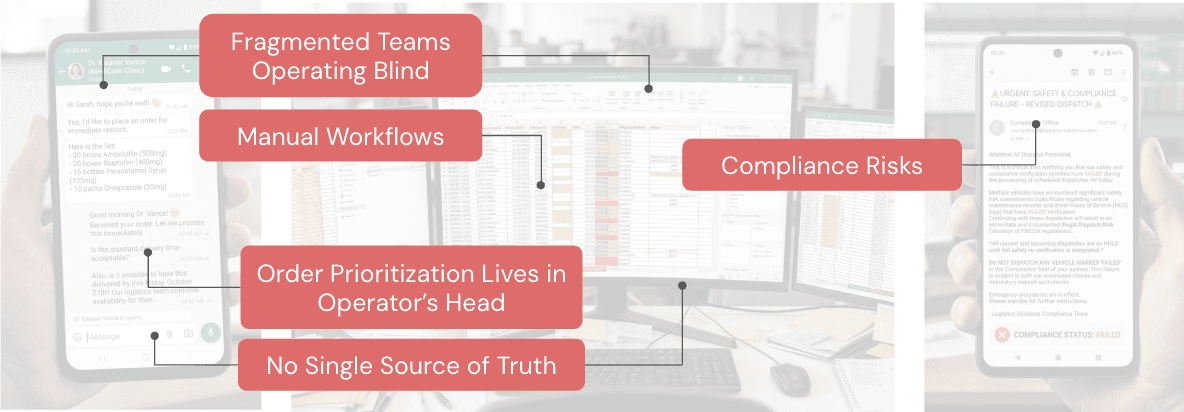
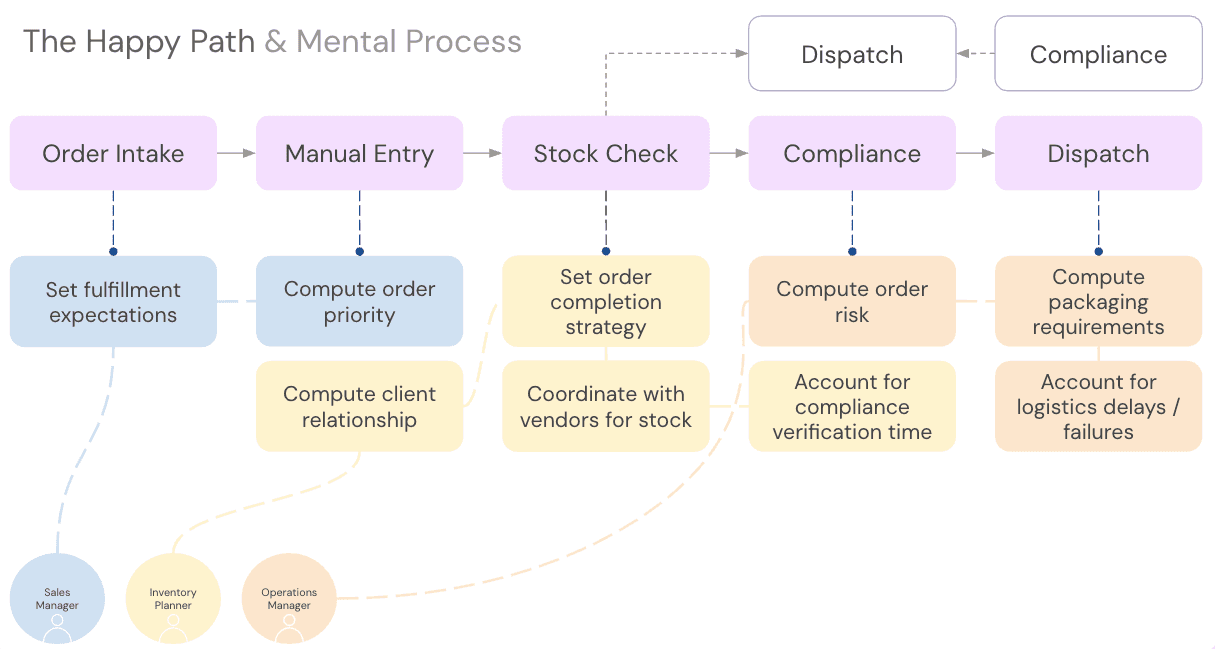
Order prioritization is entirely tribal
>>
Design
Implication
Priority must be computed and visible on every order, not held in someone's head. The scoring logic needs to be transparent enough that a new hire can understand why Order A comes before Order B without being told.
Controlled substances create disproportionate friction
>>
Design
Implication
Controlled substance orders need a dedicated Compliance Check stage in the pipeline with CDSCO status surfaced directly in the order detail not in a separate tool. The system must make compliance visible, not just auditable after the fact.
Sales reps operate completely blind
>>
Design
Implication
Sales reps need a read-only, account-centric order view that shows live pipeline status without giving them access to fulfillment operations. The view must be designed around their mental model by account, not by order stage.
Stock visibility arrives too late
>>
Design
Implication
Stock status must be surfaced at the order level on the card, in the queue, in the detail view so that procurement and fulfillment see the risk at the same moment, not sequentially.
Multi-channel order intake creates invisible work
>>
Design
Implication
The intake layer must normalize all order sources into a single queue. Channel of origin should be recorded and visible for audit purposes, but not create different workflows for staff.
Designing for trust in a high-stakes system
Two principles ran through every screen.
The system keeps a human in the loop on anything that matters. It computes, flags, and routes, but it hands the actual approve, hold, reject, and sign-off decisions to a person. In a domain where an automated approval on the wrong order is a regulatory problem, that division of labor is the design, not a limitation of it.
Every consequential action is reversible and attributed. Flagging an order asks for confirmation and tells you it can be undone from the activity log. The activity log records who did what and when, from intake through compliance. When the stakes are this high, people act faster if they know they can recover from a mistake and that the trail is honest.
The Design Decisions
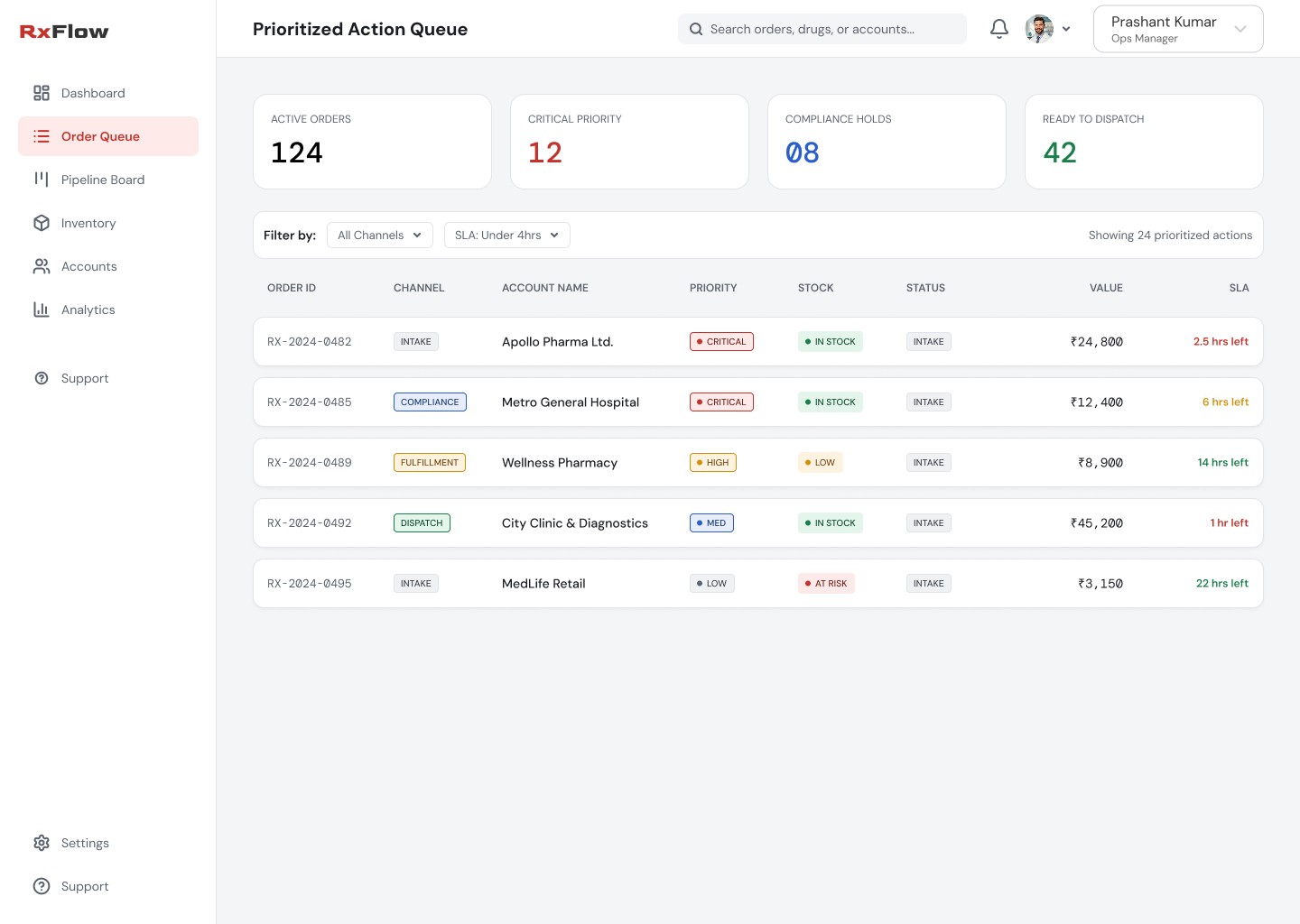
The Prioritized Action Queue is the front door. Every order carries a computed priority (Critical, High, Med, Low), a stock signal, a status, a value, and an SLA countdown that turns red as it runs out. The queue is sorted by what needs a human next, not by order ID or arrival time. The goal was that someone walking up cold could work the list top to bottom and trust the order.
The order detail leads with a fulfillment stepper: Received, Priority Assigned, Compliance Check, Picking/Packing, Ready to Ship, Shipped. A controlled substance stops at Compliance Check and shows the reason in the activity log, attributed to the system that raised it and waiting on the person who has to clear it. The manager's choices are explicit and human: Approve for Fulfillment, Place on Hold, Reject. Nothing consequential happens automatically.


The Kanban Pipeline Board is for reading the state of the whole operation at a glance: how many orders sit iin which part of the process and where the pressure is building. Same data, two jobs, so a manager can zoom between a single decision and the health of the floor.

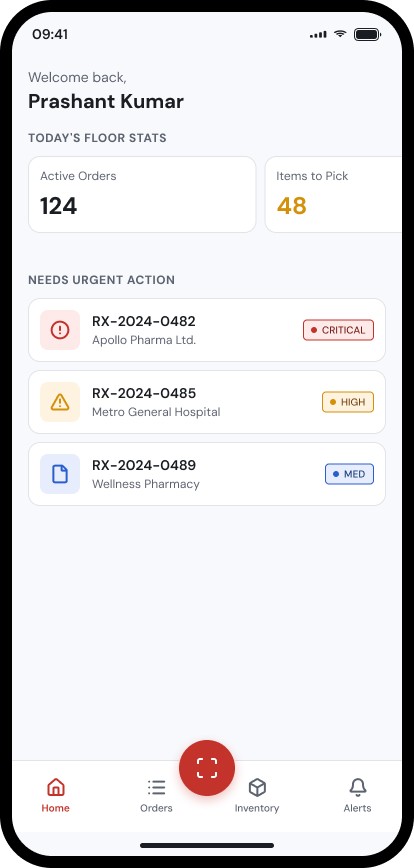
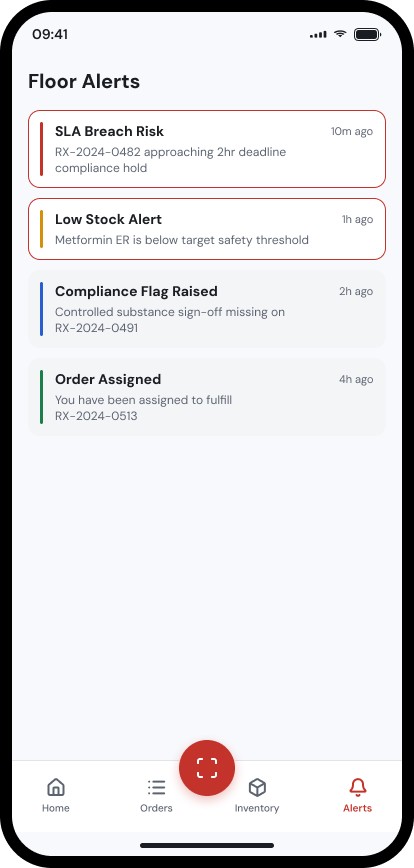
The manager works a console. The warehouse staff work a phone with one hand while holding a scanner, so I designed the mobile app as its own product, not a shrunken console. Scan a barcode, see the item with its aisle, shelf, bin, and warehouse stock, and see the open orders it is tied to. Update stock with a reason code. Flag a discrepancy. Get floor alerts for SLA risk, low stock, and compliance flags. It is deliberately narrow, because the floor does not need the whole system, it needs the next action.


ROI & Metrics
93%
reduction in SLA breach rate
35 min
recovered per fulfillment staff member per shift
< 1 hr
stock risk notification lag (down from 6.4 hrs)
68%
reduction in internal order status calls from sales team
Reflections
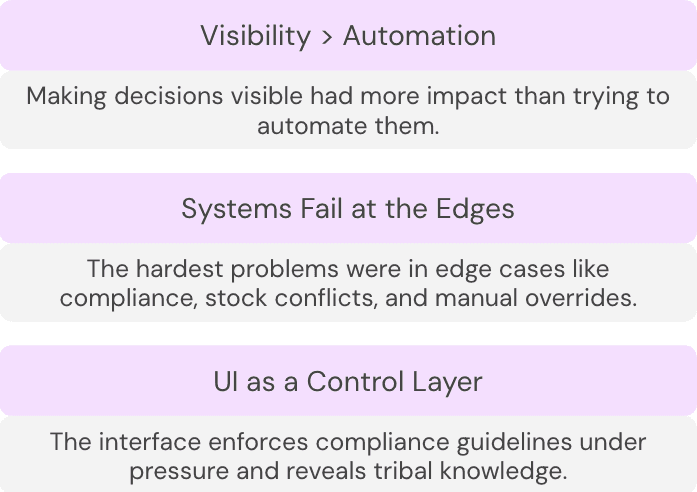
RxFlow was about making operational decision-making visible and reliable in an environment where being wrong is expensive. The decisions I am most confident in are the ones that reduced how much the system depends on any single person's memory: computed priority, compliance as a pipeline stage, and stock signals that show up at the moment of the decision instead of after it.