HydroPort
Product + Service Design | Commercialization for Clean Energy
Product
Product + Service Model
Role
Product Strategist | Team of 6
Time Duration
16 Weeks
Challenge
For industrial hydrogen producers, going green isn’t just about ambition—it’s about risk. The high upfront costs, infrastructure headaches, and uncertainty about long-term payoffs make shifting from gray to green hydrogen an intimidating leap. ATI’s alloy makes electrolyzers cheaper and faster to manufacture, but without a low-risk adoption pathway, hesitant buyers stay on the sidelines.
Solution
HydroPort removes the guesswork. A modular, rental-based electrolyzer system, it gives producers on-demand access to green hydrogen without the financial burden of permanent infrastructure. This low-risk trial approach makes the transition seamless, allowing users to explore new technology without disruption to existing operations. By simplifying adoption, HydroPort clears the path for scalable change—ensuring green hydrogen is not just possible, but practical.
Central Design Challenge
A solution that lowers the adoption barriers for Green H2 through enhanced Cost-efficiency, Scalability, and Compatibility
Central Design Challenge

Understanding the Context
Through our research and interviews, it became clear that while green hydrogen holds significant promise for decarbonizing industrial sectors, its adoption is being constrained by high capital requirements, infrastructure limitations, and uncertainty around long-term investment. ATI’s novel alloy directly addresses part of this challenge by reducing material costs and manufacturing lead times for electrolyzers. However, enabling widespread adoption will require more than material innovation—it will require a strategic approach that lowers adoption risk, supports flexible deployment, and aligns with how industrial customers make energy transition decisions.
Alignment Around Performance, Scalability, and Value
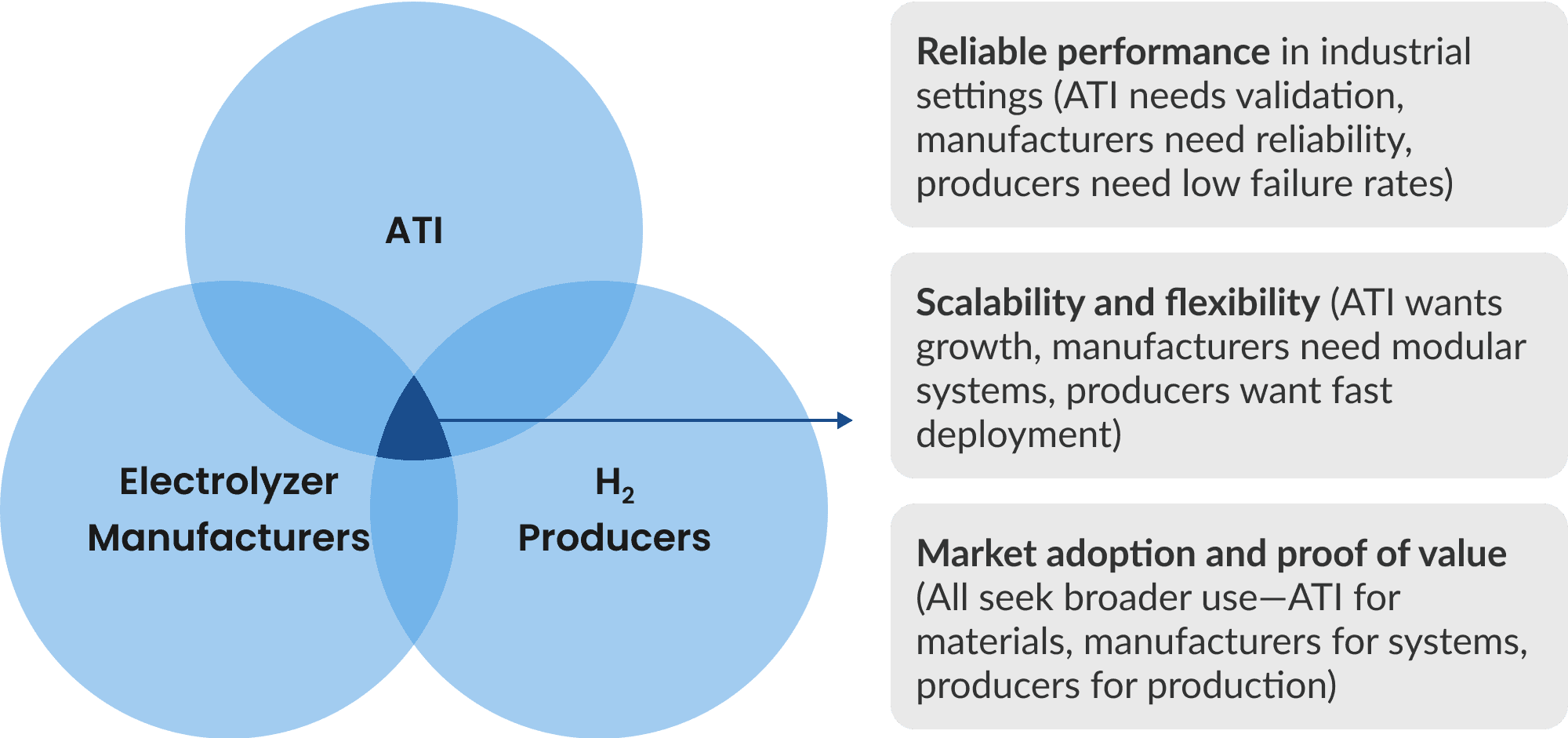
Across the value chain, stakeholders share three core priorities: reliable industrial performance, scalable and flexible solutions, and clear proof of value. ATI needs real-world validation, manufacturers require consistent system reliability, and hydrogen producers depend on low failure rates to maintain operations. Above all, adoption depends on demonstrating measurable performance and efficiency while keeping the solution affordable and accessible.
Rental System + Portable Electrolyzer Unit
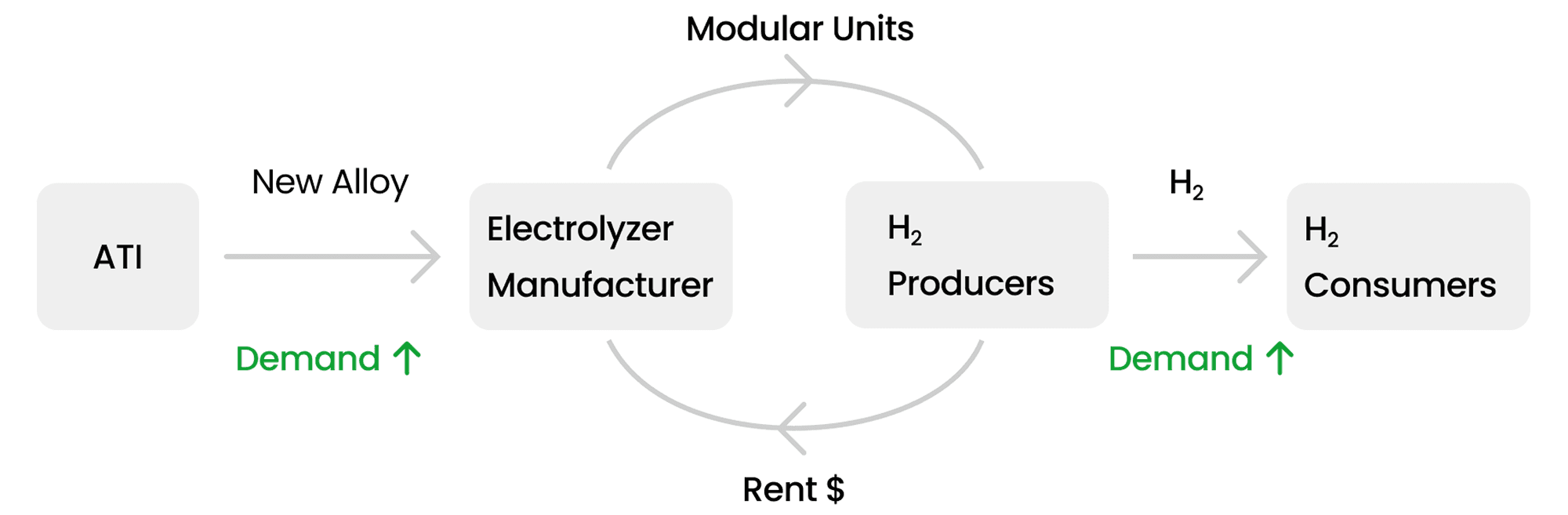
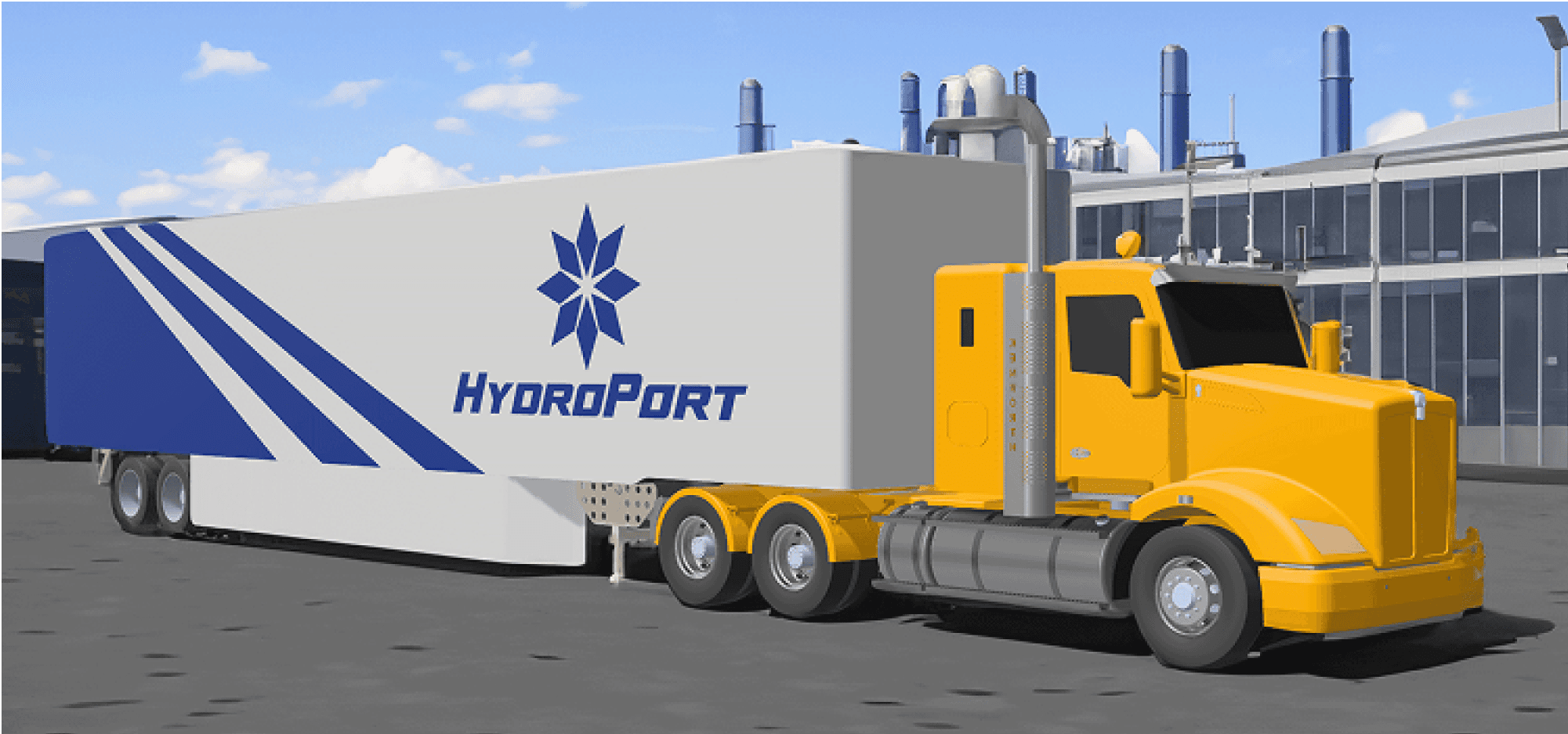
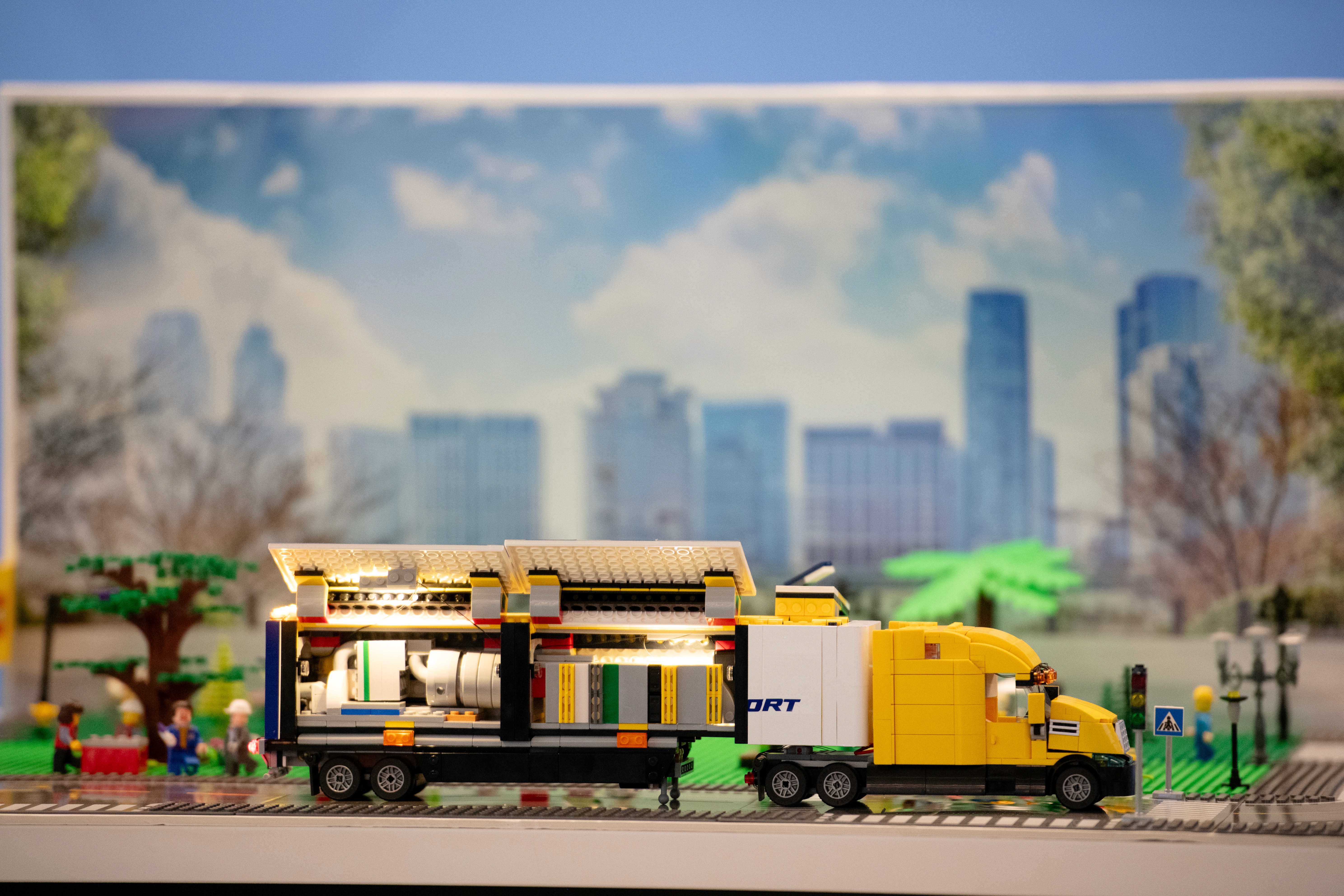
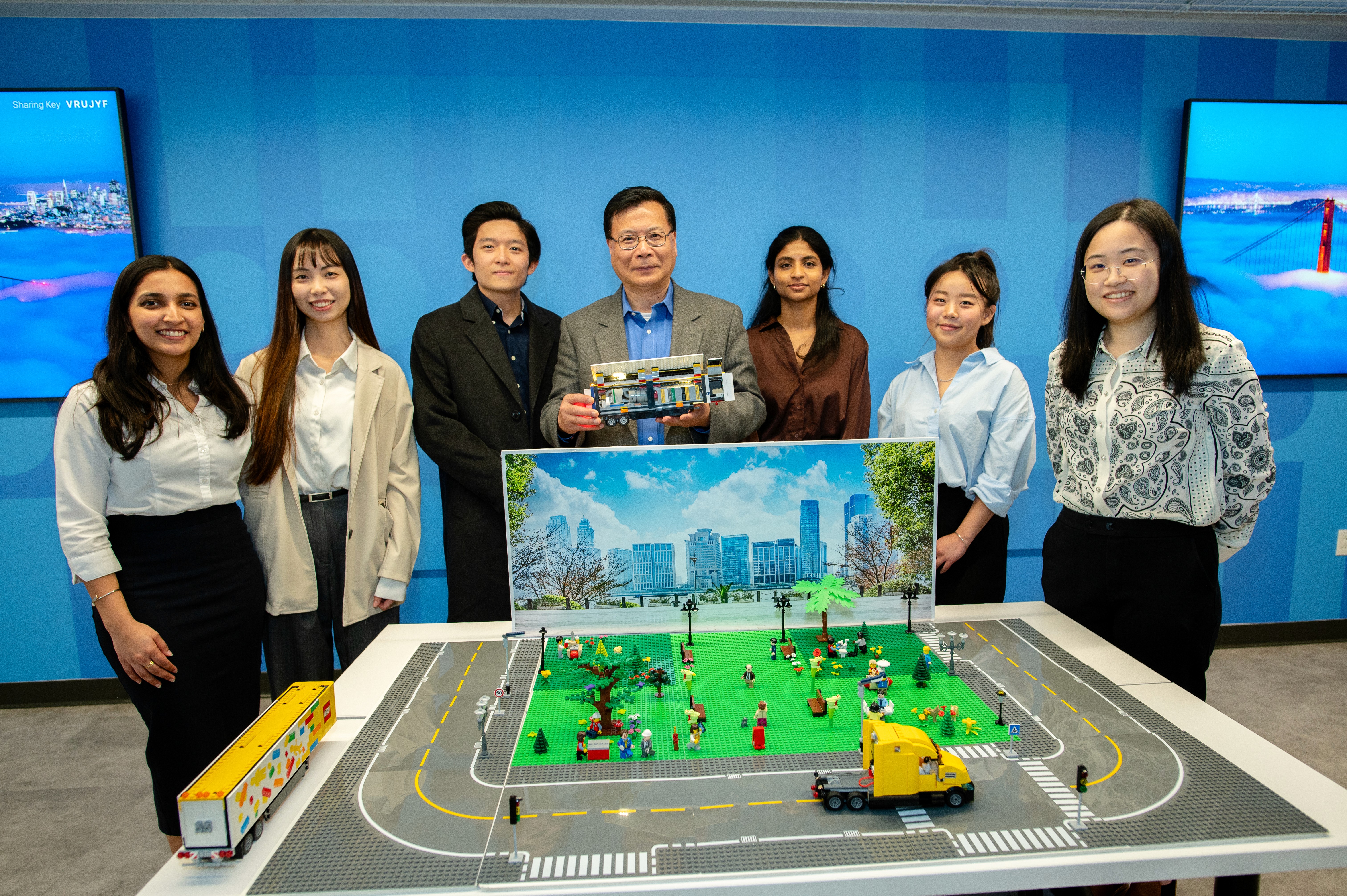
Instead of asking companies to commit to expensive, permanent hydrogen infrastructure, we reframed electrolysis as a flexible, low-risk service. The trailer-based modular system allows organizations to test, adopt, and scale green hydrogen at their own pace, removing many of the financial and operational barriers that slow adoption. At the same time, the system serves as a live demonstration platform, proving ATI’s alloy performance in real-world conditions while building trust across the hydrogen ecosystem.
Pathways to Market
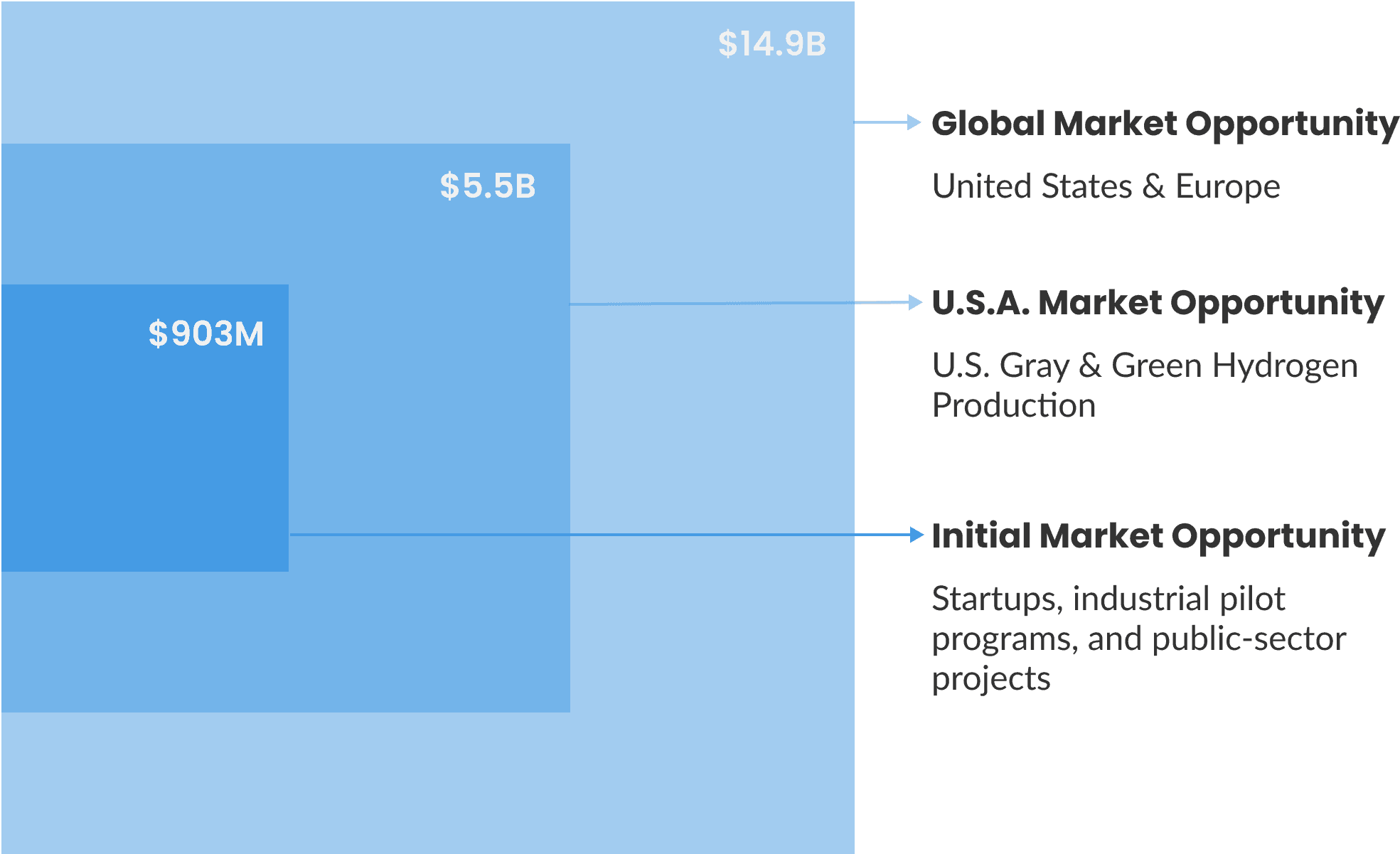
To understand where HydroPort could create the most impact, we mapped the opportunity using a TAM-SAM-SOM analysis, focusing on hydrogen producers moving from gray to green hydrogen across the U.S. and Europe. We identified U.S. gray hydrogen producers as the strongest entry point due to existing industry connections and immediate decarbonization pressure. By introducing a flexible rental model, HydroPort lowers financial risk and helps companies take their first steps toward green hydrogen adoption, building trust and momentum in a rapidly growing energy transition space.

Key Learnings
Innovation is only meaningful if it’s market-aligned
It’s not enough for a material to be technically superior—it needs a clear use case, a customer willing to switch, and a system ready to adopt it. This taught me to balance technical depth with market readiness.
The product isn’t just the alloy—it’s the ecosystem around it
From electrolyzer manufacturers to hydrogen policy frameworks, I learned to think beyond the material itself and map out the full value chain—identifying leverage points where ATI’s alloy could create real traction.
Strategy lives in constraints
Our go-to-market pathways were shaped not just by opportunity but by regulations, production scalability, and pricing pressure. This sharpened my ability to make bold but realistic recommendations grounded in systemic insight.
Deep stakeholder listening drives real positioning
Talking to people across the industry helped me shift the conversation from “here’s what the alloy does” to “here’s how it solves your biggest pain point.” That shift—from features to outcomes—was key to building a compelling case.