


The Effect of Pet Care on the Travel Experience
User Research | Caring for a Pet | MIIPS / Advanced Study
Output
Product Feature Report
Role
UX Researcher | Team of 2
Time Duration
7 Weeks
Executive Summary
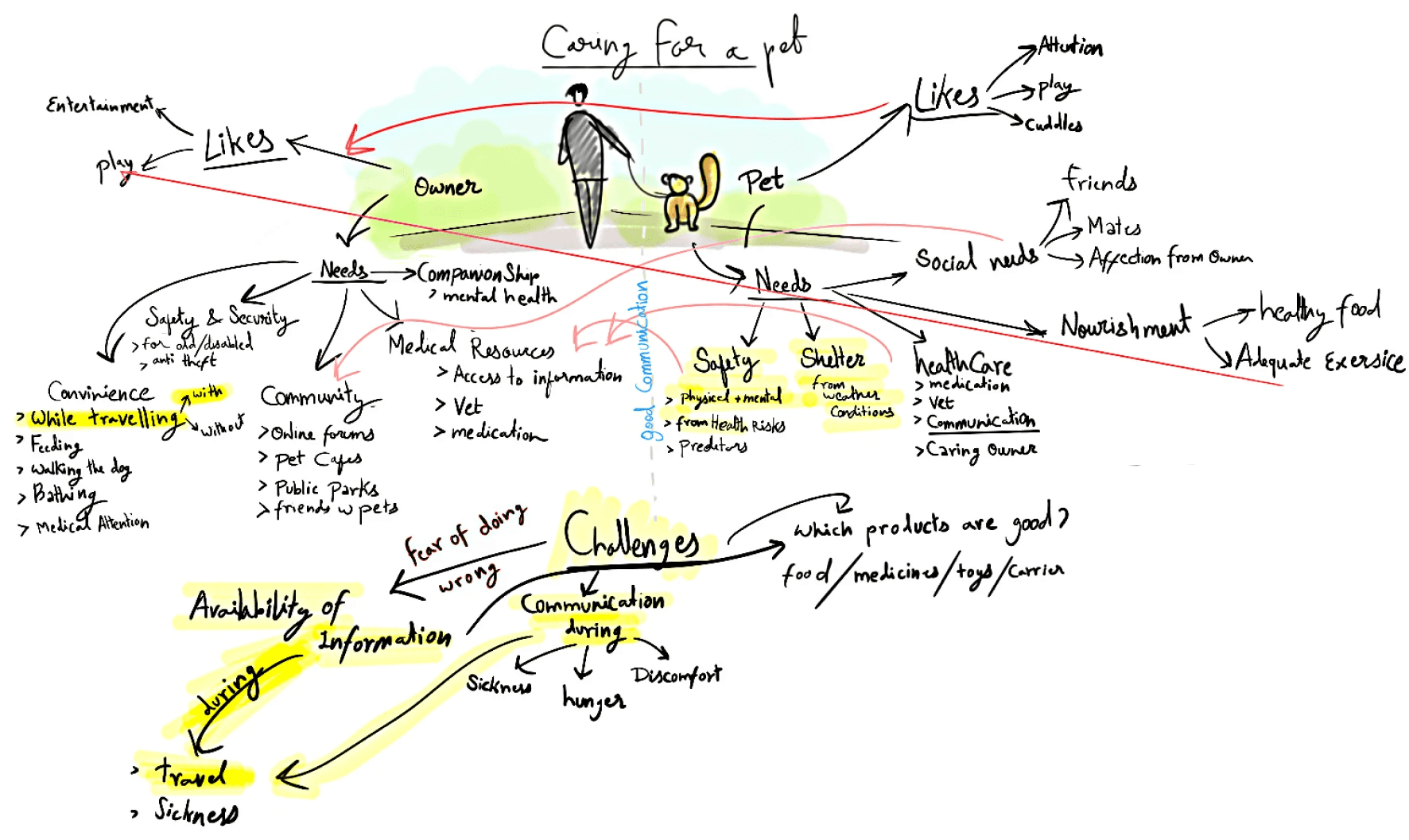
This project focused on understanding the nuances of caring for a pet with a focus on challenges of caring for pets during road travel. Using a range of exploratory research methods, including Domain Research, Concept Mapping, Observation, Role Play, and First-Person Accounts, we aimed to uncover the needs and behaviors of pet owners when preparing for and managing their pets on road trips. We employed techniques such as user interviews, role-play scenarios, and co-design sessions to gather insights from pet owners about their experiences. The study also involved secondary and field research to explore how pet owners address logistics, manage their pets’ behavior, and navigate issues like cleanliness, multi-pet travel, and adherence to travel regulations.
Environmental Design Shapes Pet Behavior and Owner Trust
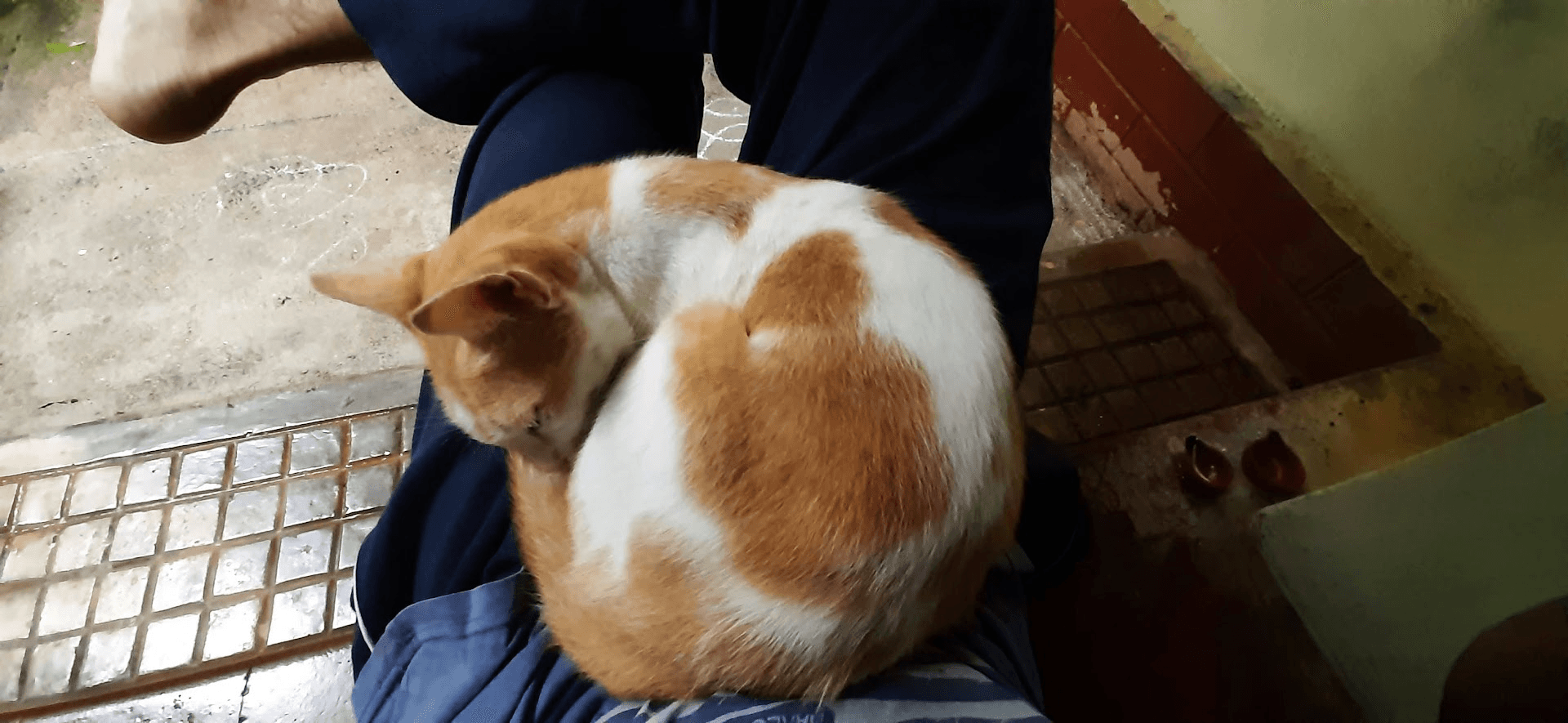
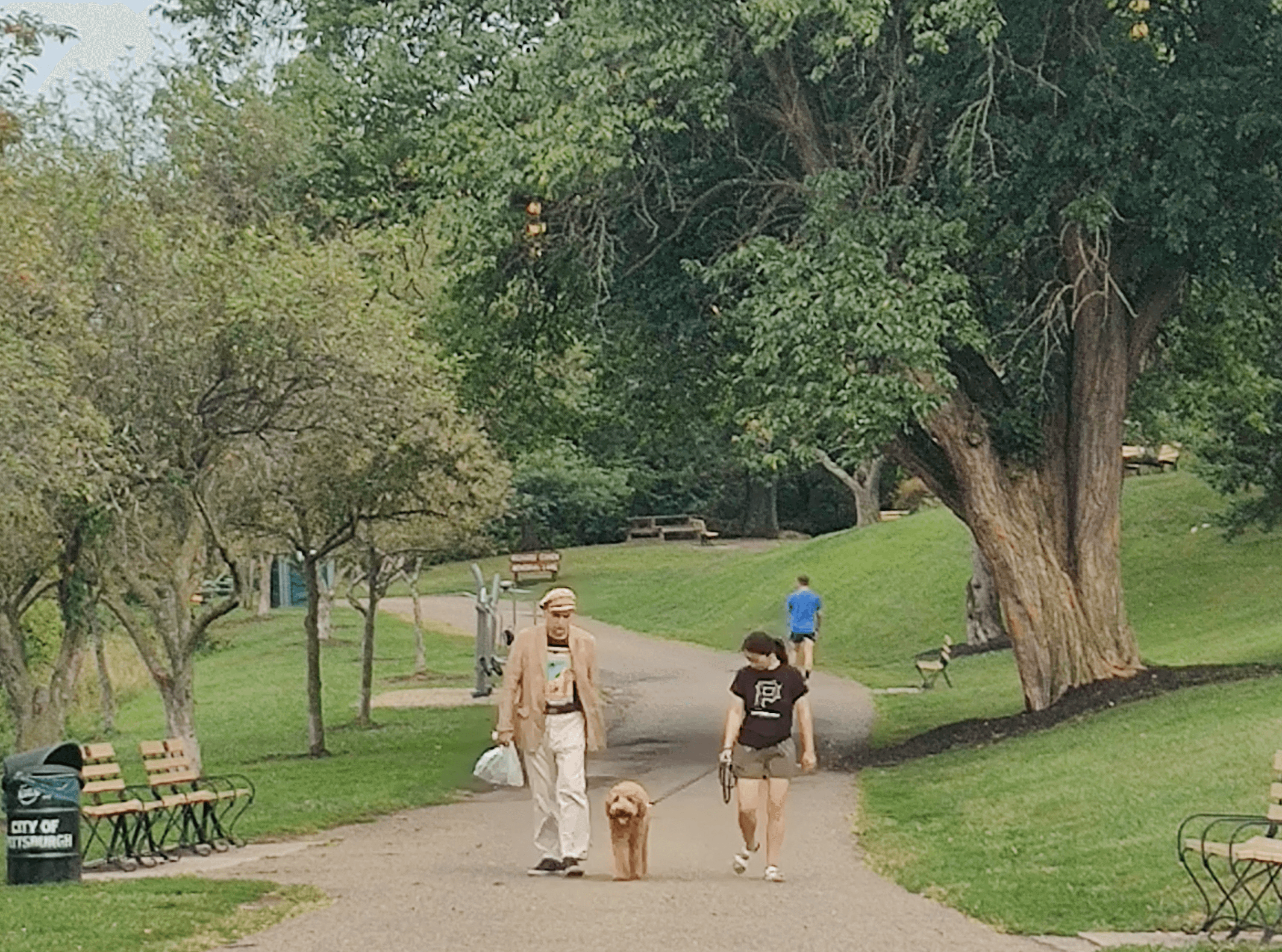
Through observation and research, it became clear that animals respond strongly to environments that allow them freedom to explore and opportunities for social interaction.
Their comfort, curiosity, or anxiety often becomes visible through behavior, offering important signals about their experience. Pet owners naturally interpret these cues and adjust their choices based on what they believe best supports their pet’s emotional well-being.
This revealed a deeply interconnected dynamic where environmental design influences not only animal behavior, but also owner confidence, trust, and overall engagement.
Pet Owners Actively Plan Around Comfort, Behavior, and Care
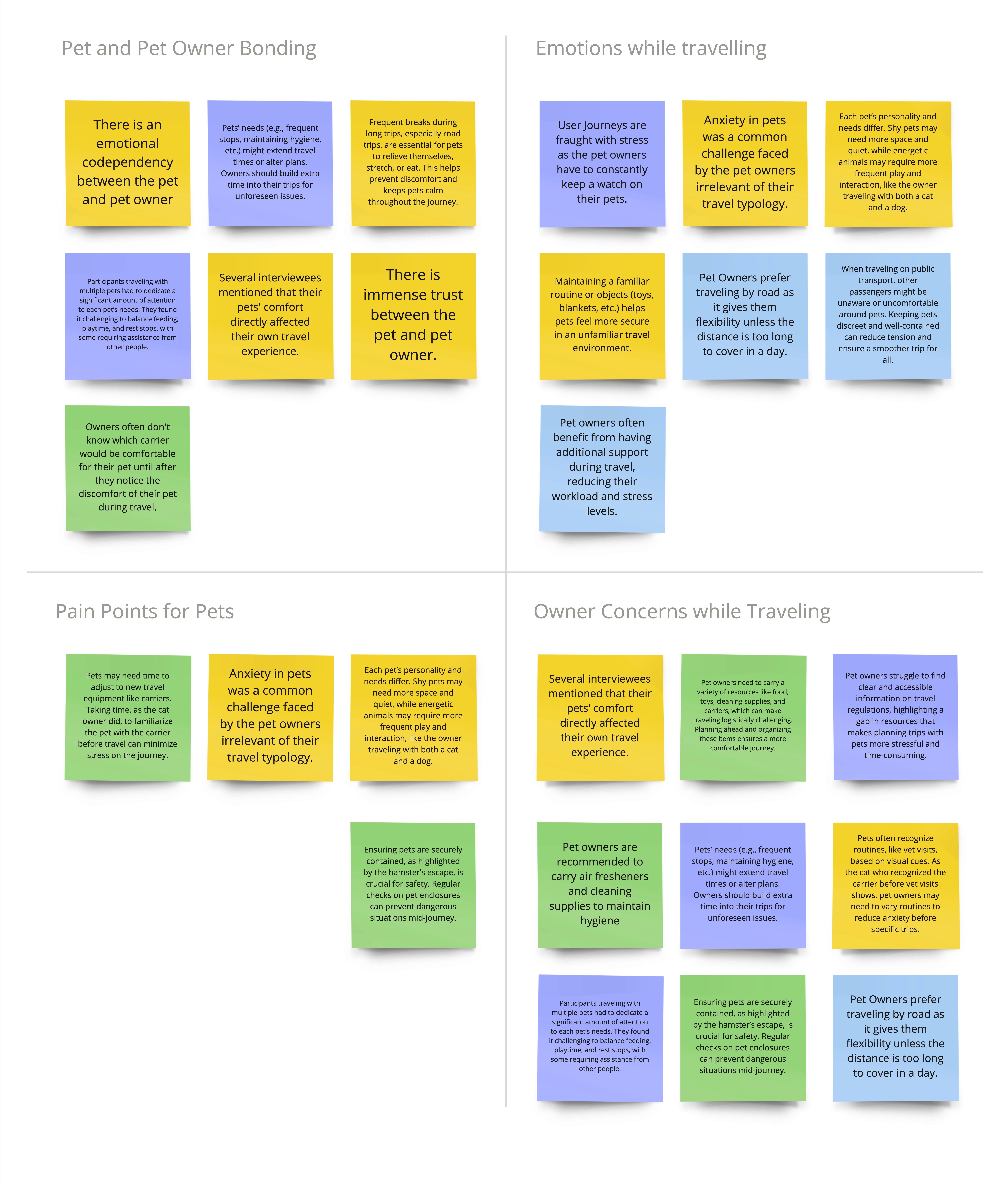
We conducted an online survey to source participants for our interviews and find the trends and challenges users faced while traveling with their pets. We conducted 6 interviews with people who have travelled with their pets aiming to understand the pain points while traveling.
Through interviews with pet owners, the study explores how they prepare, manage pet behavior, and handle issues like cleanliness, multi-pet travel, and following travel regulations. Key findings show that owners plan carefully for their pets' comfort, considering feeding schedules, time for playing, and stops for rest. For those traveling with more than one pet, the complication lies in how attention and care are dispensed. Many use companions to help share the workload on such trips.
Pet Owner Personality Affects the Travel Experience
Post Interview Hypothesis
While designed for pet comfort, carriers mainly reassure the owner. They prioritize safety and control for the owner, even if it compromises the pet’s comfort at times.
Post Interview Hypothesis
#1
Pets’ emotional states are often interdependent with their owners; calm owners tend to keep pets relaxed, while anxious owners can heighten their pet's stress. Supporting owners in staying calm is essential for a smoother travel experience.
#2
Although owners often seek to strengthen their bond with their pets, many products they purchase such as automatic feeders, catnip, or carriers are designed to minimize the time spent caring for or interacting with their pets.
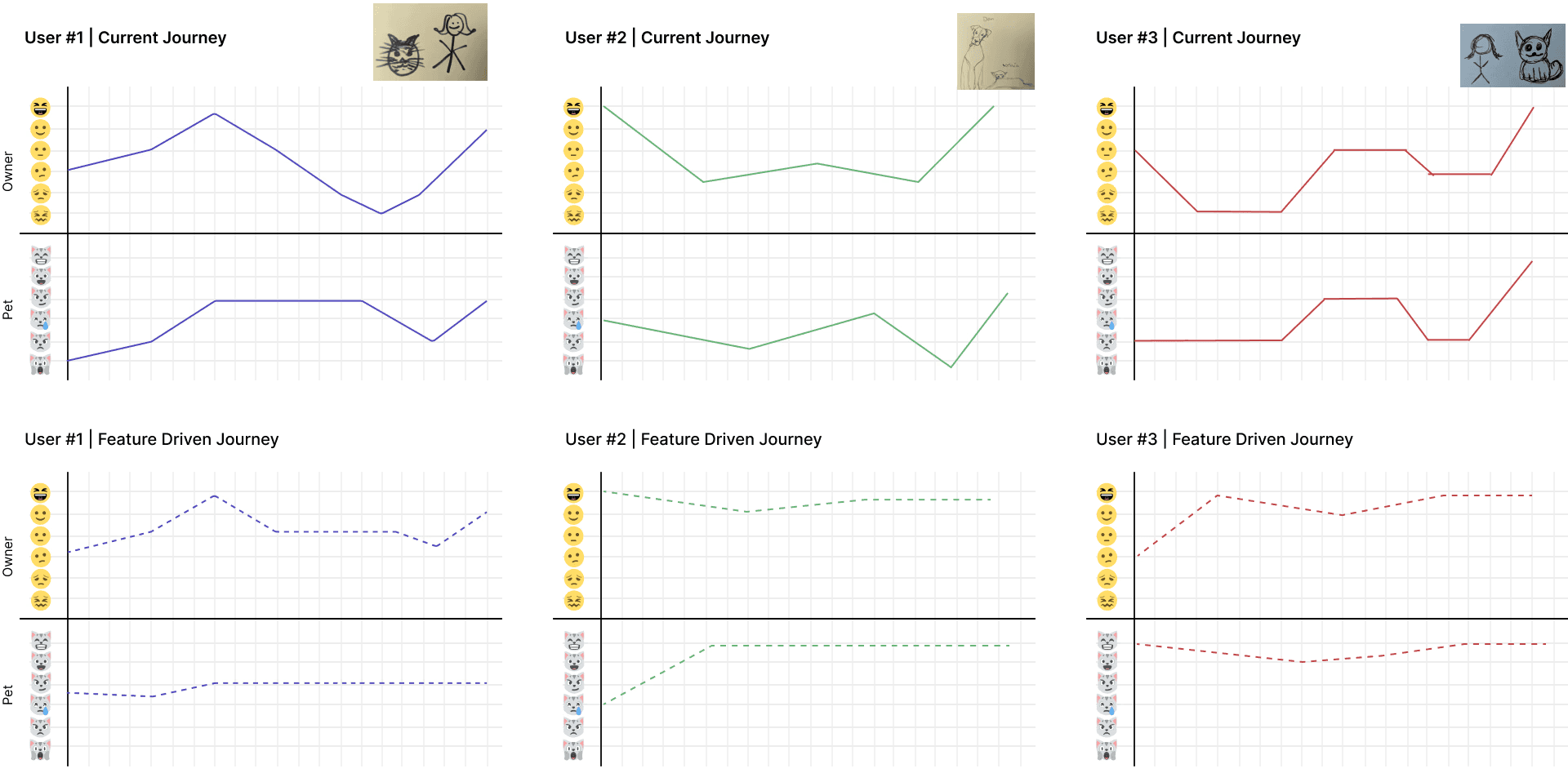
Relationship between the interdependency of emotions between pet, pet owner and the pet carrier?
Researcher Commentary
The graphs follow a similar curve initially, but when the needed features are introduced, it changes the shape of the graph in relation to each other. So that mean the pet carrier has an affect on the interdependency of emotions between pet and pet owner and a better design might enhance the travel experience for both pet and pet owner
Researcher Commentary
Pet Travel Service Design (Travel) revolves around security, access and control
Gap #1 | Pet Carrier
There is an opportunity to enhance pet comfort in the pet carrier and owner’s sense of security.
The pet carrier features collected during the co-design represent a product opportunity gap that could be included for further usability testing. The results of this would be used to prove our hypothesized user journey map.
MUST
include 90% of the features that are requested during the co-design
SHOULD
include 10% of the features that are requested during the co-design session.
COULD
include features that are not requested but would be ideal such as sensors.
Gap #2 | Travel Experience
There is an opportunity to improve ease of access to emergency services and general pet requirements.
Pet owners struggle to find reliable, pet-friendly locations and access emergency services, such as vets, stores or pet friendly restaurants while traveling, leading to stress and uncertainty on the road.
Gap #3 | Travel Preparation
There is an opportunity to improve the pre-travel preparation to reduce pet item omissions.
Pet owners face challenges in preparing all necessary items and maintaining pet hygiene and comfort during travel, leading to unpreparedness and inconvenience. Pet owners often forget crucial items or miss important routines during travel, causing discomfort or anxiety for both the pet and the owner.
MUST
include an exhaustive method to provide pet owners a way to remember all crucial items.
SHOULD
include personalized profiling for each pets’ needs to track over an extended period of time.
COULD
include regulatory advice and legal updates with regards to pet travel.