SnackHack : An Experiment on AI-Assisted Decisions
Product | Food | Vibe-Coding Experiment
Product
Web App
Role
Builder
Time Duration
2 Weeks
Description
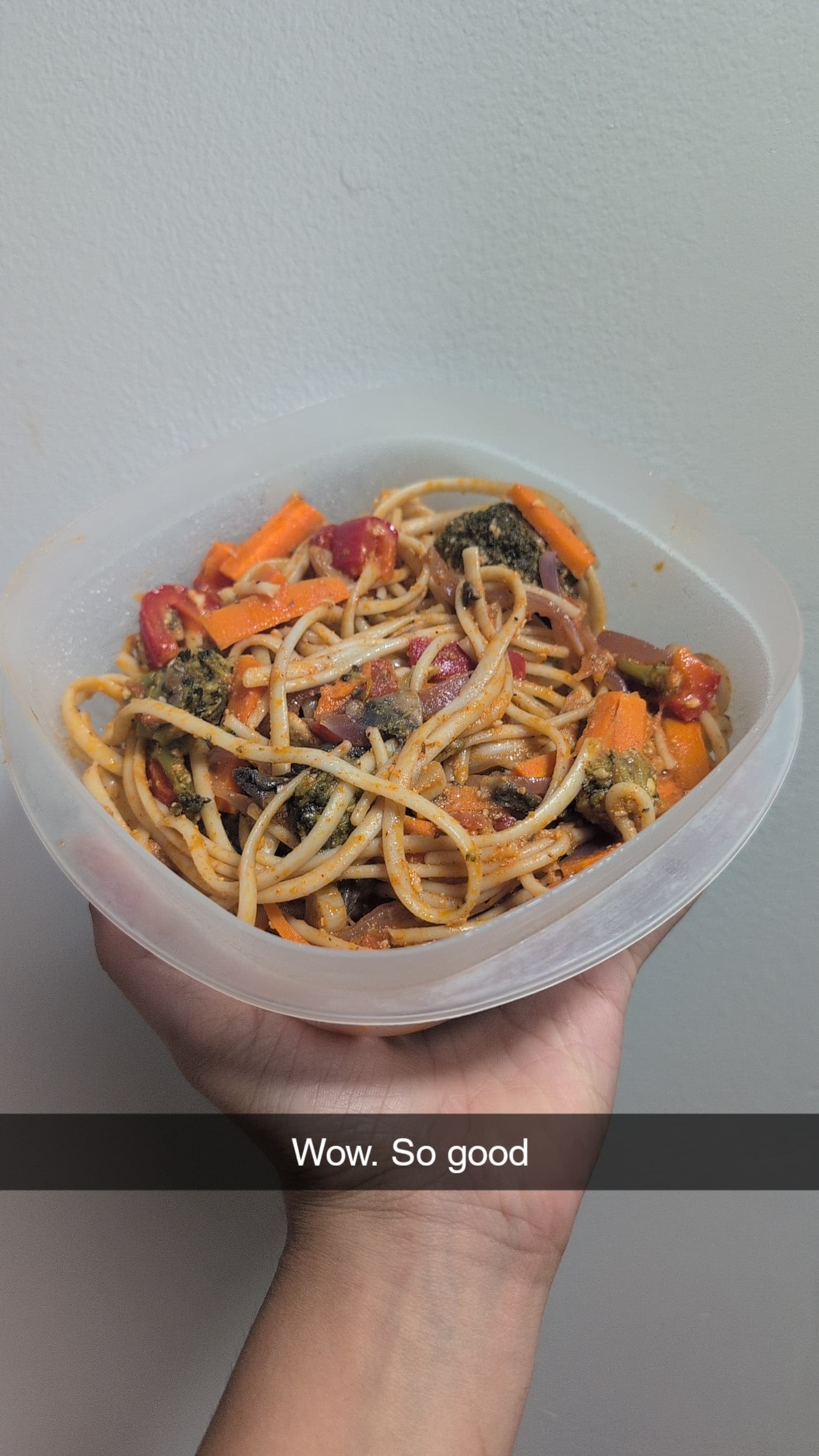
SnackHack is a lightweight experiment born out of a simple insight: cooking often feels harder than it should when your pantry is full of random ingredients. The idea started years ago when friends abroad would call me asking: “I have leftover rice, pesto, and one onion, what can I make?”
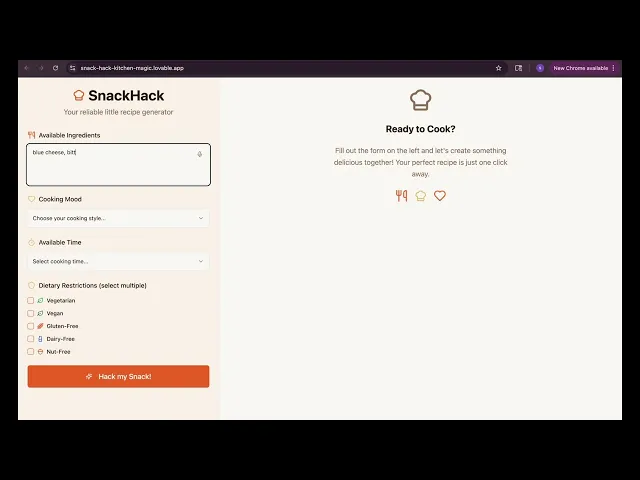
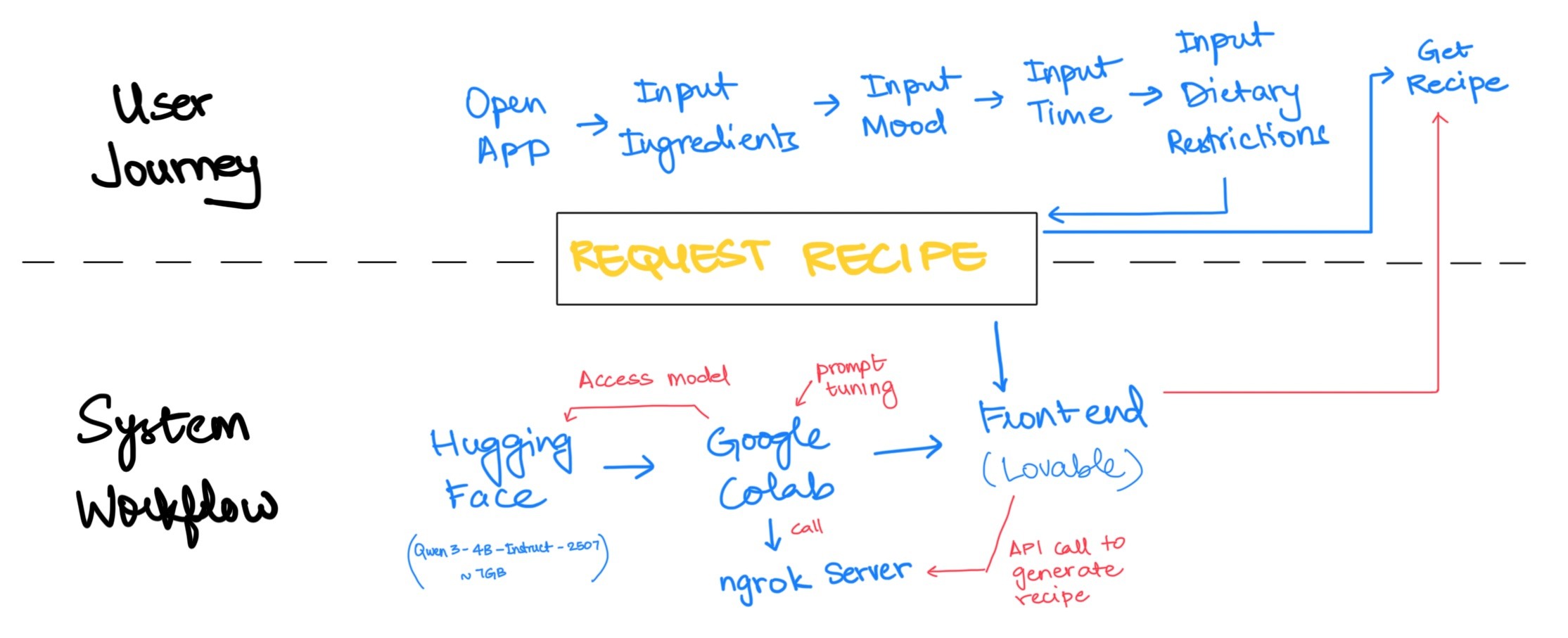
I used to give them modular recipes. Meals designed to adapt to whatever’s already in the kitchen. As a grad student facing the same problem, I decided to test whether AI could make this process faster, easier, and more fun. I turned the concept into an experiment: using Lovable for a lightweight front-end and FastAPI + Gemini for recipe generation. I iterated on prompt design, structured outputs, and tested the prototype with friends to refine the experience. SnackHack became a sandbox for exploring AI-assisted creativity, prompt engineering, and constraint-driven prototyping, while delivering recipes designed to adapt to the ingredients you already have.
Try Here
Central Question
Can AI turn random kitchen ingredients into delightful, usable recipes and how do people trust, adapt, or override those outputs?
Approach
Students & busy profesisonals
Drew from personal experience + user testing with friends to identify frustrations with recipe discovery and cooking decisions.
Experimented with multiple prompting strategies to control tone, structure, and recipe length. Iterated on token limits and temperature settings for consistency.
Tested with 15 users
Shared prompts, collected outputs, tracked reactions.
Free-tier limitations forced model selection and optimization
Chose smaller models over GPT-4 for cost and latency trade-offs. Finally, hooked to the free tier of Google AI Studio's Gemini.
SnackHack wasn’t about recipes. It was about understanding how people negotiate control with AI, when they trust it, and when they don’t. That insight is shaping how I think about designing for AI-powered experiences.
Thinking Ahead
Improve User Retention
By adding features like saving pantry states, favorite recipes, and recent searches, I’d make it easier for users to return and continue where they left off.
Increase trust & usability
By adding features like context-aware substitution suggestions, letting it learn about your health and diet goals.
Reduce Friction in Onboarding
Simplify the initial experience by skipping sign-ups and auto-detecting ingredients through image uploads or receipt scans to make starting effortless.
Monetization Paths
Validate opportunities like grocery API integrations, affiliate links, or premium recipe packs to understand potential business value early on.
Key Learnings
Balancing Creativity and Usability
Iterative testing showed that while users enjoyed quirky, mood-based recipe ideas, they only acted on outputs that were clear, practical, and trustworthy. Prompt design played a critical role in shaping this balance.
Lightweight Prototyping Unlocks Faster Feedback
By keeping the build simple (Colab backend + Lovable frontend), I was able to test quickly with real users, surface edge cases early, and refine without overinvesting in infrastructure.
Designing for Human-AI Interaction
Watching people “trick” the model or swap ingredients revealed how users naturally probe AI systems. Building SnackHack gave me insights into how prompt design, constraints, and UI clarity shape trust and engagement.
AI as a Decision-Making Partner
SnackHack wasn’t just about recipes; it highlighted how AI can augment everyday decision-making when outputs feel relevant, reliable, and contextual, a principle I’d carry forward into any AI-powered product.